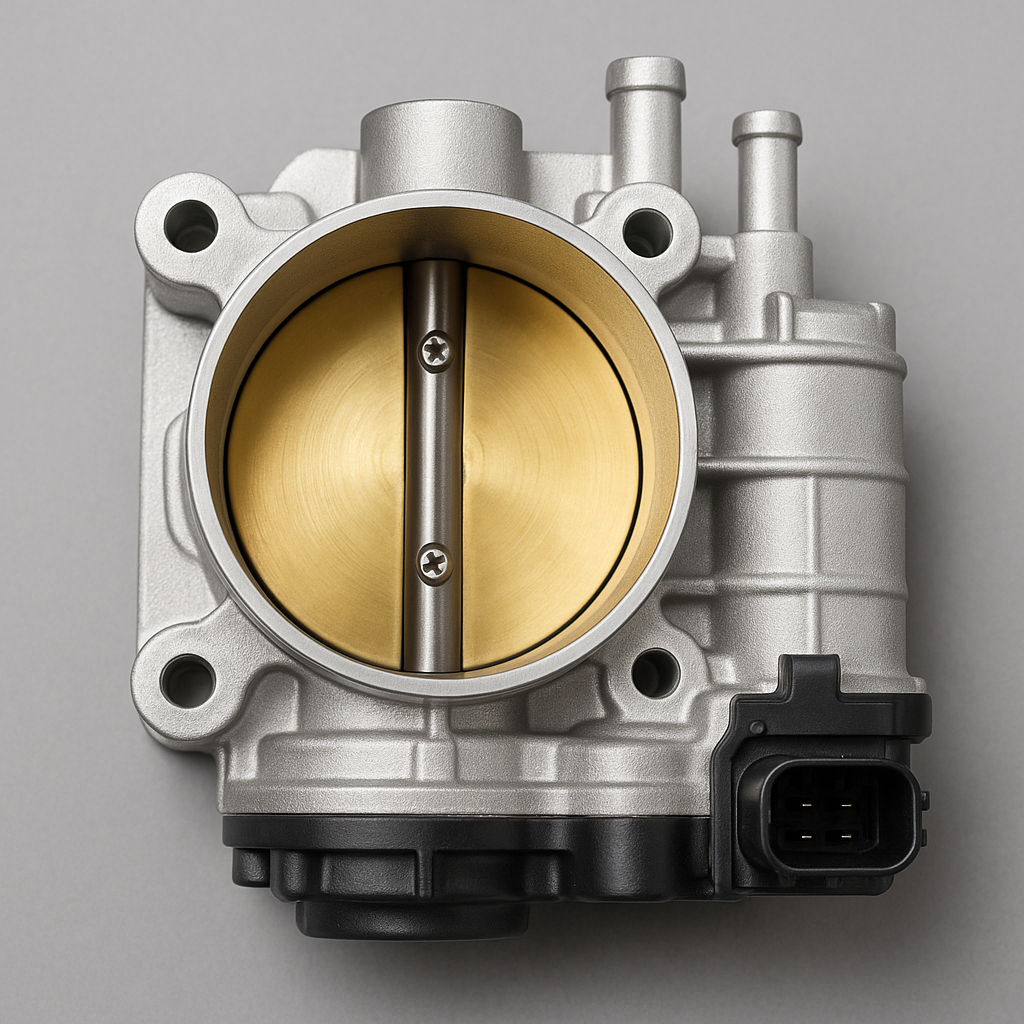
Why throttle body cleaning matters more than most drivers expect
A dirty throttle body does not usually cause dramatic failure on day one. What it does is quietly change how air enters the engine, which can show up as rough idle, hesitation when you press the pedal, unstable RPM, or a car that feels less crisp pulling away from a stop. If you have been searching for how to clean throttle body because the engine seems a little off but not broken, that is exactly the kind of problem this service often addresses.
The throttle body sits between the air intake system and the engine. Its job is simple in theory: control how much air gets in when you ask for power. In practice, it works in a dirty environment. Oil vapor from the PCV system, fine dust that slips past the air filter, and soot from normal combustion can collect around the throttle plate and bore. On drive-by-wire systems, even a thin film can affect how the electronic throttle responds at small openings. That is why a car may idle badly or feel lazy even though nothing has actually failed.
Cleaning it is not a magic fix for every drivability issue, but it is one of the few maintenance tasks that can restore lost smoothness without replacing parts. The key is doing it carefully. A throttle body is not the place to spray random chemicals and hope for the best. The finish on the bore, the throttle plate position, and in some cases the sensors and motor assembly all deserve respect.
What you should confirm before you start
Before you open the hood, make sure the throttle body is actually a reasonable suspect. A dirty throttle body often causes symptoms that appear during light throttle, idle, or the first part of acceleration. If the engine has a severe misfire, a check engine light with hard fault codes, vacuum leaks, or a failing ignition coil, cleaning the throttle body will not solve the root cause.
There is also an important distinction between older cable-operated throttles and modern electronic throttle bodies. Both can be cleaned, but electronic units need more caution. You should not force the throttle plate open aggressively on every design, and you should never soak the housing with cleaner. Some vehicles also require a relearn or idle adaptation after cleaning, because the engine control unit has to re-establish the correct idle airflow.
If the car has very high mileage and the throttle body is heavily carboned up, cleaning may help a lot. If the bore is only lightly dusty, the improvement may be subtle. That is normal. The goal is not to make it look brand new; the goal is to restore smooth airflow and accurate throttle movement.
Tools and supplies that actually make the job easier
You do not need a large toolbox, but the right supplies matter. A proper throttle body cleaner is the safest choice for most jobs because it is formulated to dissolve gum and light carbon without leaving much residue. Avoid using harsh solvents unless the manufacturer explicitly allows them. You will also want a clean microfiber cloth or lint-free shop towel, a soft-bristled brush, and basic hand tools for loosening the intake tube clamps.
For some vehicles, a new throttle body gasket is worth having on hand if the throttle body must be removed from the intake manifold. Not every job requires removal. In many cases, you can clean the bore while the part stays mounted, which is faster and reduces the chance of damaging seals. A flashlight helps you inspect the edge of the throttle plate and the inside of the bore, where grime tends to build up most heavily.
Wear gloves and eye protection. Throttle body cleaner is effective, but it is also unpleasant on skin and dangerous in the eyes. If you are working near a hot engine, let it cool first. A cold engine is easier to handle, and you are less likely to burn yourself while reaching around the intake plumbing.
How to clean throttle body without creating new problems
The safest approach is methodical, not aggressive. Start by disconnecting the negative battery terminal if your vehicle manual recommends it, especially on electronic throttle bodies. This can reduce the chance of the throttle moving unexpectedly while you are working. Then remove the intake duct or air tube that connects the air filter housing to the throttle body.
Once the throttle body is exposed, look at the deposits before touching anything. If the buildup is mostly a dark ring around the bore and the edge of the throttle plate, that is the typical pattern. Spray a small amount of throttle body cleaner onto a cloth rather than flooding the housing directly. Wipe the visible surfaces first. The cloth gives you control and keeps cleaner away from sensitive components more effectively than a direct blast.
If the throttle plate can be opened safely by hand on your specific vehicle, open it just enough to clean the backside and the bore behind it. Do not jam it forcefully. Clean the edges where sticky residue tends to form, because that is where airflow gets disturbed most. Use a soft brush only if needed, and keep it gentle. The point is to remove the film, not scrape metal.
Continue wiping until the cloth stops picking up black residue. In a badly neglected throttle body, you may need several passes. If the bore is extremely dirty, you can apply a little cleaner to the cloth again and repeat the process. Resist the urge to drench the entire assembly. Cleaner pooling inside the housing can migrate where you do not want it.
After cleaning, let the solvent evaporate fully before reassembly. Inspect the intake duct for cracks, loose clamps, or oil contamination. A clean throttle body will not help much if unmetered air is leaking in through a split hose or a misaligned clamp. Reinstall the intake tube securely, reconnect any sensors or electrical connectors you removed, and reconnect the battery if it was disconnected.
Removing the throttle body versus cleaning it in place
Many people ask whether the throttle body must be removed. The honest answer is that it depends on access, buildup, and your comfort level. Cleaning it in place is usually enough for routine maintenance. It is faster, reduces the chance of introducing dirt into the intake manifold, and avoids gasket replacement on some vehicles.
Removing the throttle body makes sense when the unit is heavily contaminated, when access is poor, or when you want to clean the backside of the plate more thoroughly. It also gives you a chance to inspect the gasket surface, the mounting flange, and the passages around the unit. The trade-off is that removal adds risk: stripped bolts, damaged gaskets, and the possibility of creating an air leak during reinstallation.
If you do remove it, keep the intake opening covered so nothing falls into the manifold. Even a small screw or piece of rag left behind can create a serious problem once the engine starts. This is one of those jobs where careful organization matters more than speed.
What not to do while cleaning
One of the most common mistakes is using the wrong cleaner. Carburetor cleaner is more aggressive and can be too harsh for some throttle bodies, especially those with coatings or electronic components nearby. Another mistake is scrubbing the throttle plate so hard that you damage the surface or force the plate against the motor gears in an electronic unit.
Do not spray cleaner into the throttle body while the engine is running unless the service procedure for your exact vehicle specifically allows it. That old habit can create more trouble than it solves, especially with modern electronically controlled throttles. Likewise, do not use metal picks, abrasive pads, or sandpaper. A throttle body is a precision air metering component, not a rusty bracket.
It is also easy to overlook the air intake path before the throttle body. If the air filter box is dirty, the intake tube is cracked, or the PCV system is carrying excessive oil vapor, the throttle body will get dirty again quickly. Cleaning without checking the source of contamination is a short-term fix.
Idle relearn and why the car may act strange afterward
After cleaning, some vehicles idle differently for a while. That does not automatically mean something is wrong. The engine control unit has learned certain airflow characteristics from the old dirty throttle body. Once the passage is clean again, the previous adaptation may not match reality.
Depending on the vehicle, the idle may hunt slightly, flare, or settle after a short drive cycle. Some cars relearn on their own after a few starts and a mix of idle and normal driving. Others need a specific idle relearn or throttle adaptation procedure. The exact method varies widely, which is why checking the service information for your model is worth the time.
If the engine runs badly immediately after cleaning, recheck your work before assuming the throttle body is the issue. A loose intake clamp, disconnected sensor, or leftover rag in the duct can create symptoms that look like a failed component. The first drive after service should be cautious and local, not a long trip.
How often should it be cleaned?
There is no universal interval that fits every car. A vehicle driven mostly on short trips, in dusty conditions, or with a lot of stop-and-go traffic may need attention sooner than one used for steady highway driving. Engines with more oil vapor entering the intake can also dirty the throttle body faster.
Rather than cleaning on a fixed schedule alone, pay attention to symptoms and inspection. If the idle has become less stable, the throttle response feels delayed, or the bore shows a visible ring of grime during an air filter service, cleaning is reasonable. For many drivers, checking it whenever the intake duct is off for another service is a practical approach.
Do not over-service it. A throttle body does not need to be cleaned every few months just because it exists. Unnecessary cleaning increases the chance of damaging seals, sensors, or the electronic throttle mechanism. The better habit is to inspect, judge the buildup honestly, and act only when the contamination is actually affecting airflow.
Signs the problem is bigger than a dirty throttle body
Some symptoms that seem like throttle body contamination are actually caused by something else. A vacuum leak can mimic a dirty throttle body by upsetting idle airflow. A failing mass airflow sensor can make the engine hesitate even if the throttle body is spotless. Carbon buildup on intake valves, common on some direct-injection engines, can also create rough running that cleaning the throttle body will not cure.
If the check engine light is on, read the codes before cleaning anything. Codes related to throttle position, air metering, or idle control can point you in the right direction, but they still need interpretation. A single code does not always mean the throttle body is bad. It may be reacting to another airflow problem elsewhere in the system.
When cleaning helps only a little, that is useful information. It tells you the throttle body was part of the story, but not the whole story. Good diagnosis is often about separating the easy fix from the real fault.
Practical results you should expect after the job
A successful cleaning usually brings back smoother idle and more immediate throttle response at low speed. The change may be subtle on a well-maintained car and more obvious on a neglected one. You should not expect a dramatic horsepower gain. This is about restoring lost efficiency and drivability, not adding performance.
The best sign that the job was done well is consistency. The engine should start cleanly, settle into a stable idle, and respond without a sticky or delayed feel as you tip into the accelerator. If those behaviors improve, the cleaning was worthwhile. If they do not, the issue likely lies elsewhere in the intake, fuel, or ignition system.
For many owners, learning how to clean throttle body properly is less about saving money than about avoiding unnecessary parts replacement. A careful cleaning can solve a nuisance problem in under an hour, but only if it is done with the right expectations and enough attention to detail.
A simple checklist before you close the hood
- Make sure all intake clamps are tight and the duct is seated correctly.
- Confirm every electrical connector removed during the job is fully latched.
- Check that no tools, towels, or debris remain in the intake tract.
- Start the engine and listen for air leaks, hissing, or an unstable idle.
- Drive gently at first and watch for throttle response and idle changes.
That final check matters because most post-service problems come from reassembly, not the cleaning itself. A throttle body job is straightforward when you stay disciplined: inspect first, clean gently, reassemble carefully, and verify the result. Done that way, it is one of the most satisfying maintenance tasks you can perform on a car that has started to feel a little less responsive than it should.

Comments (0)
No comments yet. Be the first to comment!
Leave a Comment