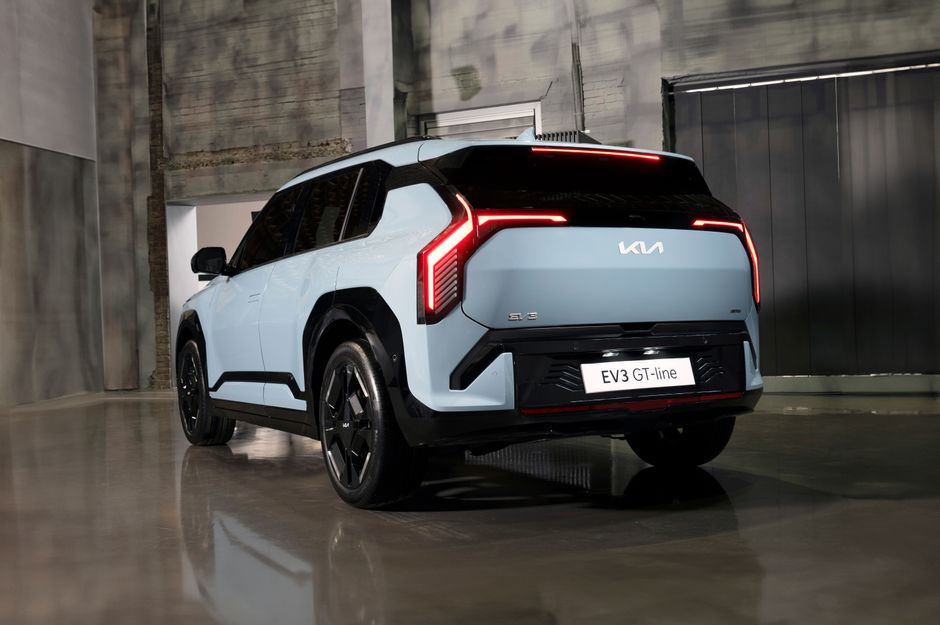
Why the Kia EV3 cabin matters more than the spec sheet
The conversation around the Kia EV3 usually starts with range, charging speed, and price positioning, but the cabin is where the car has to justify itself every day. A compact electric SUV can look clever on paper and still feel frustrating once you live with it: screen placement, storage layout, seat comfort, and software responsiveness matter far more than brochure language suggests. The Kia EV3 interior features and technology package is interesting because Kia appears to be aiming for a cabin that feels closer to a scaled-down family EV than a stripped-back city crossover.
That distinction matters. In this class, buyers are not just comparing logos or acceleration figures. They are deciding whether the car can handle school runs, commuting, weekend luggage, and the small annoyances that reveal whether a cabin was designed by people who actually thought through daily use. The EV3’s interior is best understood as a practical workspace first and a style statement second.
Layout: a cabin built around calm, not drama
The first thing you notice inside the EV3 is that the dashboard tries to reduce visual noise. Kia has been moving toward cleaner cabins across its EV range, and the EV3 continues that approach with a broad horizontal layout, slim air vents, and a screen-heavy center section that avoids the clutter of a traditional button-dense dashboard. The result is not minimalist in the cold, Scandinavian sense; it is more controlled and less busy than many compact SUVs, which is useful when the driver is already dealing with navigation, charging plans, and traffic.
That calm layout also helps the car feel larger than its footprint. Electric vehicles often benefit from flat floors and packaging freedom, but they can still feel cramped if the design is heavy or the center console is overbuilt. The EV3 seems to use its space sensibly, with an emphasis on open sightlines and a cabin that does not visually collapse around the front occupants.
Displays and interface: the part you will interact with most
Kia has made a habit of combining a digital instrument cluster with a central infotainment display in a single, wide visual unit, and the EV3 follows that general formula. In practice, the value of this setup depends on three things: how quickly the system boots, how clearly the information is separated, and whether the climate controls remain easy to reach without digging through menus. Those are the places where many modern cabins fail.
The EV3’s technology story is strongest when it treats the driver’s attention as limited. A good EV interface should make charging status, range estimates, navigation prompts, and energy flow easy to read at a glance. It should also avoid burying essential controls behind layers of touch menus. If Kia has executed this well, the cabin should feel less like a tablet glued to a dashboard and more like a coherent operating environment. That difference is subtle in photos and obvious after a week of use.
What a good EV interface should do in practice
- Show battery and range information without forcing the driver to hunt for it.
- Keep climate settings accessible during driving.
- Offer clear route planning with charging stops when needed.
- Respond quickly enough that simple tasks do not become annoying.
- Use graphics that are readable in bright daylight, not just in a showroom.
Physical controls still matter, even in a screen-led cabin
One of the easiest mistakes in modern EV design is assuming that software alone can replace physical usability. In reality, the best cabins mix both. The EV3’s value will depend partly on how much Kia has preserved tactile controls for the functions drivers use constantly. Volume, temperature, defrost, and drive mode selection are all examples of tasks that should be easy to perform without looking away from the road for too long.
This is not nostalgia for old dashboards. It is about reducing friction. A cabin can be technically advanced and still be tiring if every adjustment requires multiple taps. For families, this becomes even more important because rear-seat passengers, pets, bags, and distractions already compete for attention. A well-judged blend of buttons and touch surfaces is a real feature, not a design compromise.
Seats, posture, and the difference between comfortable and merely soft
Seat comfort in a compact EV is often misunderstood. Buyers focus on padding thickness, but the real question is support over time. A seat can feel plush for ten minutes and still be poor on a long drive if the cushion angle, shoulder support, and lower-back shaping are wrong. The EV3’s cabin has to compete in a segment where many buyers will use the car for commuting as much as for family trips, so seat design will matter more than most first impressions suggest.
For an electric SUV, good seating position also means visibility. Drivers tend to sit slightly higher in this type of vehicle, but too much height can make the cabin feel top-heavy and reduce confidence in tight parking spaces. The EV3 should aim for the middle ground: enough height to see out comfortably, but not so much that it feels like you are perched on top of the car. That balance is one of the most underrated parts of interior engineering.
Rear-seat space and everyday family usefulness
Kia’s EVs have generally been strong on packaging, and the EV3 will likely be judged heavily on rear-seat practicality. In this class, the rear bench is not just for occasional passengers; it is where child seats go, where teenagers complain about legroom, and where adults discover whether the floor, door opening, and headroom are genuinely usable. A flat floor helps, but the shape of the seat base and the angle of the backrest matter just as much.
The real test is whether the rear cabin feels like a place people can tolerate for more than a short ride. That means enough knee room, a sensible seat height, and enough foot space under the front seats. It also means rear air vents, charging ports, and door pockets are not luxury extras but part of the car’s everyday credibility. If Kia has paid attention to these details, the EV3 becomes much more than a stylish commuter.
Storage: the small details that decide whether the cabin feels smart
Storage is where many compact cars reveal whether they were designed by stylists or by people who understand real life. Electric vehicles have an advantage here because the absence of a transmission tunnel opens up new possibilities, but that advantage disappears quickly if the center console is awkward or the door bins are shallow. The EV3’s interior should be judged on how easily it handles phones, water bottles, charging cables, sunglasses, and the random objects every family car accumulates.
Useful storage is not about having the most cubbies. It is about putting them where they are actually needed. A shallow tray that keeps a phone from sliding around is more useful than a deep pocket that hides everything. Likewise, a center bin that can swallow a cable and a wallet without becoming a black hole is more valuable than a decorative compartment. These are the details that make a cabin feel thoughtfully engineered.
Storage features worth checking on a test drive
- Wireless phone charging placement and grip.
- Door pocket size for bottles and small items.
- Center console usability while driving.
- Rear-seat storage for passengers and child gear.
- Space for charging leads without cluttering the footwell.
Materials and perceived quality: where EVs are won or lost
Material quality in a mainstream EV is not about luxury in the traditional sense. It is about whether the surfaces feel durable, the touch points feel intentional, and the cabin avoids the cheap gloss that dates quickly. Kia has been better than many rivals at giving its interiors a sense of design coherence, even when using hard plastics in sensible places. That matters because buyers notice the areas they touch every day: steering wheel, armrests, door tops, seat bolsters, and the screen surround.
The EV3 should be evaluated less on whether every surface is soft and more on whether the hard surfaces are placed where they make sense. A sturdy lower dash or lower door trim is acceptable if the upper contact points feel pleasant and the assembly does not creak. In a car aimed at families and commuters, durability can be a stronger form of quality than decorative sheen.
Lighting, ambience, and how the cabin feels at night
Ambient lighting has become a common feature in modern EVs, but not all lighting is useful. Some systems are purely decorative; others help define the cabin and make it easier to orient controls at night. In the EV3, lighting should be seen as part of the user experience rather than an aesthetic afterthought. A cabin that feels coherent after dark is often a cabin that has been designed with restraint.
Night-time usability also depends on screen brightness, glare control, and the way reflections are handled in the windshield and side windows. A cleanly designed dashboard can still become irritating if the displays are too bright or the trim creates distracting reflections. This is especially relevant in an EV because drivers may spend more time watching the energy display, navigation, and charging information than they would in a conventional car.
Software, connectivity, and the reality of living with the tech
Technology in an EV is only impressive if it remains useful after the first week. That means the infotainment system has to connect reliably, the navigation has to understand charging needs, and smartphone integration has to work without constant re-pairing or lag. For many buyers, this is where the car either feels polished or starts to feel like a collection of features held together by marketing.
The most valuable software in a car like the EV3 is not the flashiest. It is the software that quietly solves routine problems: preconditioning the cabin, finding charging stations on a route, remembering driver profiles, and keeping media playback stable. If Kia has integrated those functions well, the EV3 could feel more mature than some rivals that rely on flashy graphics but weaker logic. The best systems disappear into the background because they simply work.
Technology features that matter more than headline gimmicks
- Stable smartphone connectivity.
- Route planning that accounts for charging stops.
- Driver profile memory for seat and mirror settings.
- Clear energy and range visualization.
- Fast response when switching between apps and menus.
Driver assistance and the less glamorous side of technology
Driver-assistance systems are often discussed in terms of safety, but their cabin impact is just as important. Lane-keeping alerts, adaptive cruise control, parking aids, and blind-spot monitoring all shape how relaxed a driver feels inside the car. In a compact EV, these systems can reduce stress in traffic and during parking, where visibility is often compromised by thick pillars and high beltlines.
The key is calibration. A system that intervenes too aggressively becomes annoying, while one that is too passive barely justifies its existence. Good assistance tech should feel like a patient co-driver, not an overreactive supervisor. That balance is particularly important for buyers who will use the EV3 in dense urban environments, where low-speed maneuvering and frequent lane changes are part of daily life.
Charging convenience inside the cabin
Charging technology is usually discussed outside the car, but the cabin still plays a major role in how painless the experience feels. USB-C port placement, wireless charging, cable storage, and the visibility of charging status all affect the day-to-day ownership experience. If the EV3 makes it easy for front and rear passengers to keep devices charged, that is not a minor convenience; it is part of the car’s core usability.
It also helps if the vehicle communicates charging progress clearly. Owners should not have to guess whether the car is accepting power, whether fast charging is active, or how much range has been recovered. A thoughtful interface can turn a potentially frustrating stop into a predictable routine, which is exactly what EV ownership needs more of.
Who the EV3 interior seems aimed at
The EV3’s cabin appears aimed at buyers who want a practical EV without moving up to a larger, more expensive SUV. That includes small families, urban professionals, and first-time EV owners who need the technology to be understandable rather than intimidating. The interior design suggests Kia wants to avoid both extremes: it is not trying to be austere, and it is not trying to be a gimmick-filled lounge.
That positioning is smart because it matches how most people actually buy cars. They want a cabin that feels pleasant on day one, easy on day 100, and durable on day 1,000. If the EV3 delivers on that promise, its interior will be one of the car’s strongest arguments, not just a supporting detail.
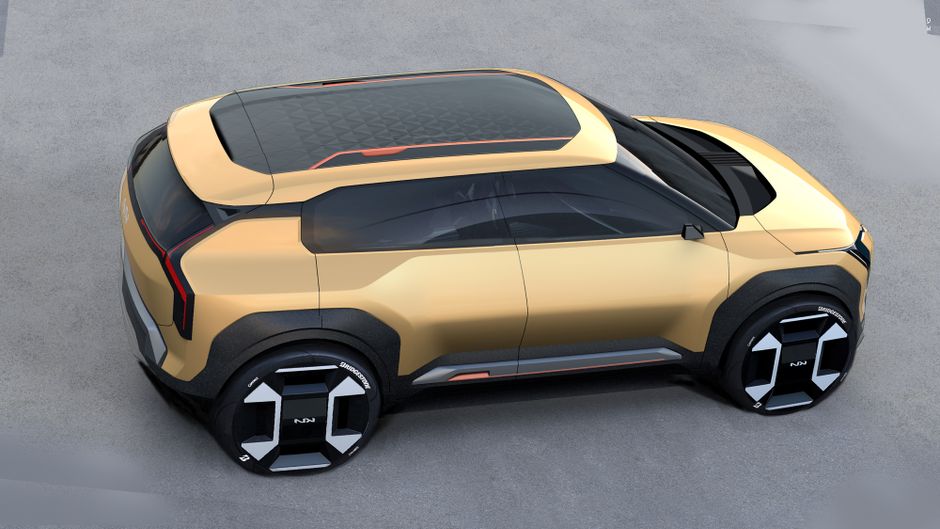
What to check before you decide the cabin works for you
Photos and press materials can make almost any cabin look well considered. The real verdict comes from sitting in the car with your own routine in mind. Try the seat with your usual posture, pair your phone, open the storage spaces, and see whether the controls fall naturally to hand. If you have children, test the rear doors and child-seat access. If you commute long distances, check the clarity of the displays in daylight and the ease of adjusting climate settings without distraction.
That practical checklist matters more than any single feature. A cabin succeeds when the pieces work together: seating, screens, storage, lighting, and software all reinforcing one another. The Kia EV3 will stand or fall on that integration. If Kia has made the right choices, the car will feel less like a compact EV with nice screens and more like a genuinely usable family tool that happens to be electric.

Comments (0)
No comments yet. Be the first to comment!
Leave a Comment