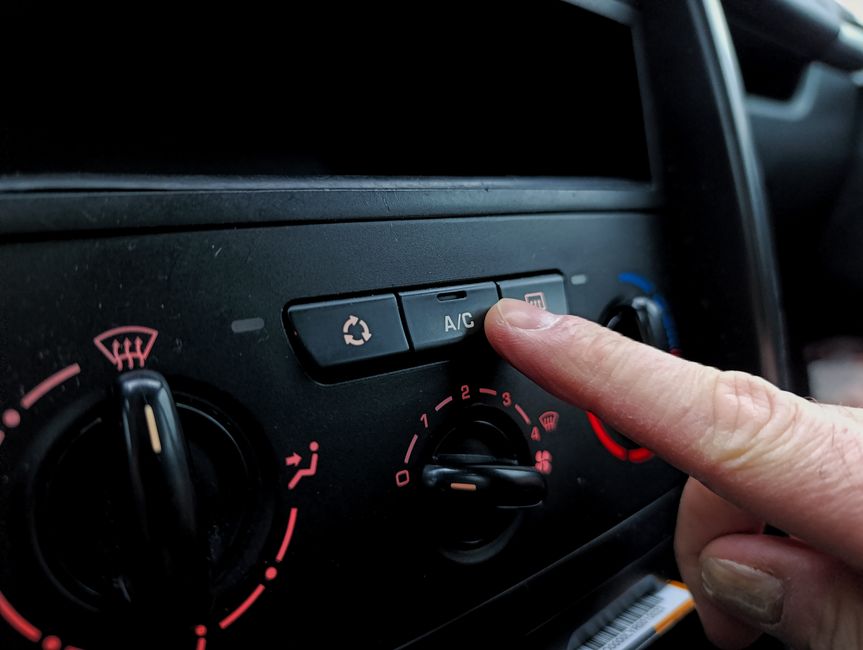
When the air turns warm only at a stoplight
A car AC blows warm at idle for a reason that is often more mechanical than mysterious: the system is struggling to reject heat when airflow and engine speed drop. That detail matters, because the same car may feel perfectly cold at highway speed, then disappoint you the moment you sit in traffic. The pattern points away from a random refrigerant myth and toward a small set of failures that show up when the system is under its worst operating conditions.
The useful question is not simply whether the air is warm. It is whether it is warm only at idle, warm all the time, or cold at first and then slowly turns warm. Those three patterns usually lead to different diagnoses. If you learn to separate them, you can avoid the common trap of replacing refrigerant blindly and hoping the problem disappears.
Why idle is the hardest condition for an AC system
An automotive air-conditioning system depends on two things that are easier to provide while driving: airflow through the condenser and enough engine speed to keep the compressor moving refrigerant efficiently. At idle, both are reduced. The condenser fan has to do more of the cooling work, and the compressor may be turning slowly enough that a marginal system falls behind.
That is why a weak component can hide during normal driving. On the road, the natural airflow across the condenser helps the system dump heat. At a stop, the system has to rely on electric fans, belt drive, refrigerant charge, and compressor condition all at once. If any one of those is borderline, the cabin air can go from cold to lukewarm very quickly.
The most common reasons a car AC blows warm at idle
1. The condenser fan is not doing its job
This is one of the first things I would check. When the car is stationary, the condenser fan is the difference between proper heat rejection and a rising high-side pressure that chokes the system. If the fan is dead, slow, noisy, or only works intermittently, the AC may feel acceptable while moving and weak at idle.
A simple field check helps: with the engine running and the AC on max, look and listen for the fan near the radiator and condenser. If the fan never starts, or starts only after the pressure climbs too high, the problem may be electrical, not refrigerant-related. Common causes include a failed fan motor, blown fuse, bad relay, wiring fault, or a pressure switch issue.
2. Refrigerant charge is low, but not always empty
Low refrigerant is common, but the detail that matters is how low. A system that is slightly undercharged may still cool while driving, then lose performance at idle because the evaporator and compressor are no longer operating in the range they were designed for. The compressor may cycle too often, suction pressure may drop too far, and cooling output falls off.
People often assume “low charge” means the system only needs a quick top-off. That approach can mask a leak and sometimes makes diagnosis worse. The correct fix is to find why the charge is low in the first place. A proper inspection should include visible leak points, oily residue around fittings, the compressor body, condenser edges, service ports, and the evaporator drain area if accessible.
3. The compressor is worn or weak at low speed
A compressor can still move refrigerant well enough at speed and fail to keep up at idle. Internal wear, a slipping clutch, or variable-displacement control problems can all produce this behavior. The symptom is often a system that seems “almost cold” but never quite gets there in traffic.
One clue is the sound and behavior of the compressor clutch. If the clutch engages and disengages erratically, or if the compressor body is hot and the vent temperature rises as soon as the car stops, the compressor may not be maintaining the pressure differential it should. On some vehicles, a control valve failure inside the compressor is more common than a complete mechanical seizure, which is why replacing only the clutch is not always a real fix.
4. The condenser is heat-soaked or blocked
The condenser sits in the worst possible place for road debris, bugs, and bent fins. If it cannot shed heat efficiently, the system may work at first and then lose performance when idling or after a long drive. Heat soak can also be made worse by a damaged radiator stack, aftermarket lights or accessories blocking airflow, or a condenser that is externally dirty enough to reduce heat transfer.
Cleaning matters more than many owners expect. A condenser packed with dirt on the engine side may look fine from the front. If airflow is restricted, the fan has to work harder, high-side pressure climbs, and the compressor may be forced into a less efficient operating range. In hot weather, that can be enough to turn cold air into warm air at a stop.
5. The belt drive is slipping
If the compressor is belt-driven, a worn belt or weak tensioner can let the compressor lag under load. That does not always show up as a squeal. Sometimes the only symptom is poor cooling at idle, when engine vibration and accessory load make slip more likely.
A cracked belt, glazed surface, or bouncing tensioner pulley is worth treating as a real AC issue, not just a maintenance item. If the belt is slipping, the compressor speed may drop exactly when the system needs stable output most. Replacing the refrigerant will not fix that.
6. The cabin blend door is mixing in heat
Sometimes the AC system is making cold air, but the car still blows warm because the HVAC box is blending that air with heater-core air. A stuck blend door, faulty actuator, or control issue can create a symptom that mimics a weak refrigerant system.
This is why vent-temperature diagnosis should not stop at the hood. If one side of the cabin is colder than the other, or the air changes when you move the temperature knob even though the AC is on, the issue may be in the HVAC controls rather than the refrigeration circuit. That distinction saves a lot of unnecessary parts replacement.
How to tell whether the problem is airflow, charge, or compressor output
A practical diagnosis starts with a simple observation: does the AC get colder when the car is moving? If yes, airflow across the condenser is a major suspect. If no, the problem may be charge level, compressor performance, or an HVAC blend issue. That one question narrows the field quickly.
Next, check the condenser fan operation with the AC on. If the fan is not running, or if it runs weakly, fix that before touching refrigerant. If the fan works properly, inspect the condenser face for blockage and confirm the belt and tensioner are in good condition. Only after those basics should you move to pressure testing and leak diagnosis.
Pressure readings tell a more complete story than vent temperature alone, but they need to be interpreted together. Low suction and low discharge pressures can point to a low charge. Low suction with very high discharge can suggest airflow problems or an overcharge. A compressor that is not pumping correctly may show pressure behavior that does not match a healthy system. Without gauges and a working understanding of what the readings mean, guessing becomes expensive.
What not to do when the AC gets warm at idle
The most common mistake is adding refrigerant because the system feels weak. That can temporarily improve cooling, but if the root cause is a fan failure or a leak, the improvement will be short-lived or may create new problems. Overcharging can raise pressures, reduce efficiency, and stress the compressor.
Another mistake is assuming that a cold blast while driving means the AC is fine. Many failing systems look acceptable on the road and fail only where diagnosis is easiest to miss: in traffic, in a driveway, or after a long idle. That pattern is not a minor inconvenience. It is often the first warning that the system is running outside its comfort zone.
It is also unwise to replace major components without checking the basics. A compressor swap will not fix a dead fan. A new condenser will not fix a slipping belt. A recharge will not fix a blend door. The best repairs are the ones that match the actual fault, not the most expensive theory.
A sensible step-by-step check you can do before paying for repairs
- Turn the AC to maximum cold, recirculation on, and idle the car with the hood open.
- Confirm the condenser/radiator fan starts when the AC is switched on.
- Watch whether vent air gets warmer as the engine idles longer.
- Check the belt and tensioner for visible wear or wobble.
- Inspect the front of the condenser for dirt, debris, bent fins, or blocked airflow.
- Look for oily residue around AC fittings, hoses, the compressor, and service ports.
- Notice whether the temperature changes when you adjust the cabin temperature control, which can hint at a blend-door issue.
This process will not diagnose every fault, but it will keep you from chasing the wrong one. In practice, that is half the battle. A car AC blows warm at idle because the system is being asked to perform under conditions where a weak link becomes obvious. If you identify the weak link first, the repair tends to be faster, cheaper, and more durable.
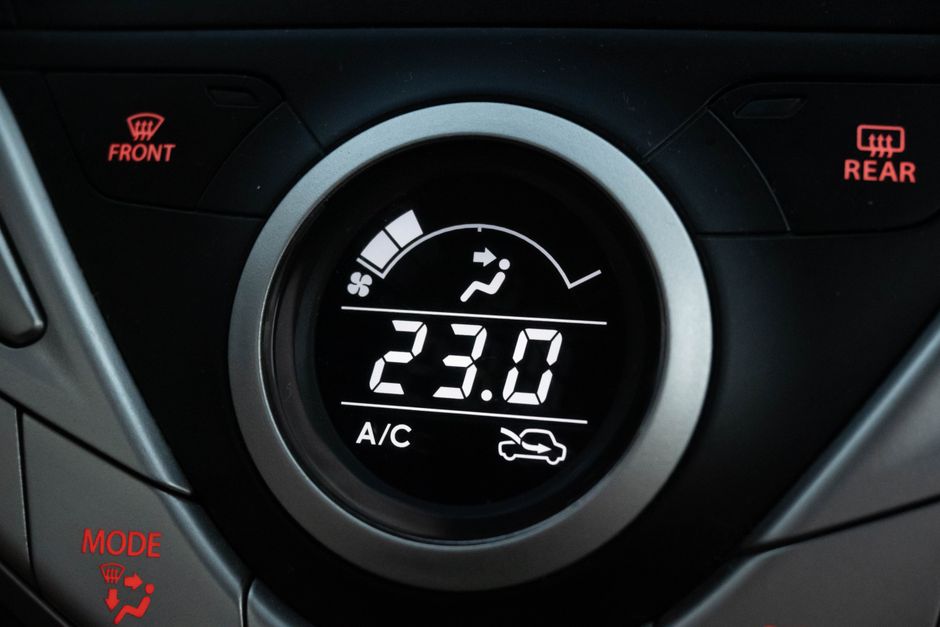
When the repair is simple and when it is not
If the problem is a failed fan relay, a dirty condenser, or a worn belt, the fix is usually straightforward. Those are the kinds of faults that can make a car behave as if the AC system is failing when the refrigeration circuit itself is still basically sound. Once corrected, the system often returns to normal immediately.
If the issue is low refrigerant from a leak, the repair is more involved because the leak has to be found and sealed before the system is recharged. If the compressor is weak, replacement may be necessary, and on many vehicles that means dealing with the receiver-drier or accumulator, flushing or replacing contaminated components, and evacuating the system properly. Those jobs are not difficult for a qualified shop, but they are not the kind of repair that should be guessed at.
The good news is that an idle-only cooling problem usually leaves clues. The fan, the condenser, the belt drive, and the compressor all behave differently when the car is stationary. Once you know which part changes when the car stops, the diagnosis becomes much more precise than the symptom sounds at first.
Bottom line for drivers
If your car AC blows warm at idle, treat it as a clue, not a verdict. The problem is often tied to airflow across the condenser, fan operation, refrigerant charge, or compressor performance under low-speed conditions. That is why the same system can feel fine on the highway and disappointing in traffic.
Start with the fan, the condenser, and the belt before assuming the system simply needs refrigerant. If those basics check out, then pressure testing and leak diagnosis are worth the time. The fastest way to a real fix is to match the repair to the operating condition that exposes the fault.

Comments (0)
No comments yet. Be the first to comment!
Leave a Comment