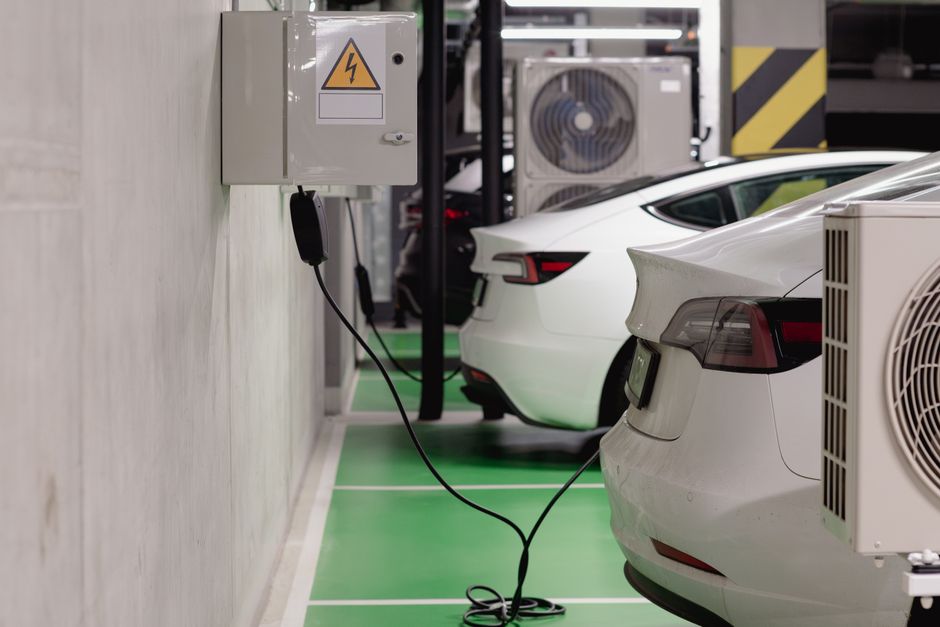
How much does EV charging cost & Understanding the Energy Unit
Electric vehicles consume electricity measured in kilowatt‑hours (kWh). One kWh powers a 1‑kW device for one hour, or a 30‑kWh battery for roughly 100 miles of driving, depending on model efficiency.
Home Charging: Base Electricity Cost
Residential electricity rates vary by region, utility, and contract type. In the United States the average residential price hovers around 13 ¢/kWh, while European countries often see 20–30 ¢/kWh. Multiplying the rate by the vehicle’s consumption yields a baseline cost.
- Example: A 2022 Nissan Leaf uses 30 kWh per 100 mi. At 13 ¢/kWh the expense is 30 kWh × $0.13 = $3.90 for 100 mi, or $0.039 per mile.
- Example: A 2023 Tesla Model Y consumes 28 kWh per 100 mi. At 25 ¢/kWh (Germany) the cost becomes 28 kWh × $0.25 = $7.00 for 100 mi, or $0.070 per mile.
These figures exclude the charger’s efficiency loss, typically 5‑10 % for Level 2 units. Adding a 7 % loss raises the Nissan Leaf cost to about $4.18 per 100 mi.
Time‑of‑Use Pricing and Seasonal Effects
Many utilities publish time‑of‑use (TOU) tariffs that split the day into peak, mid‑peak, and off‑peak windows. Off‑peak rates can be as low as 8 ¢/kWh, while peak periods may exceed 20 ¢/kWh.
- California’s PG&E TOU‑C plan: off‑peak 10 ¢/kWh (10 p.m.–6 a.m.), peak 30 ¢/kWh (4 p.m.–9 p.m.). Charging overnight reduces a 30 kWh charge from $9.00 (peak) to $3.00 (off‑peak).
- Ontario’s Time‑of‑Use: off‑peak 9 ¢/kWh, mid‑peak 13 ¢/kWh, on‑peak 17 ¢/kWh. Shifting a 60 kWh weekly charge from on‑peak to off‑peak saves $4.80.
Seasonal demand spikes can raise rates during summer heat waves, especially in regions where air‑conditioner usage drives overall grid load.
Public Fast Chargers: Pricing Models
Public DC fast chargers differ from residential outlets in three main ways: price per kWh, price per minute, and flat‑fee access.
- Price per kWh: Networks such as Electrify America charge $0.31/kWh for non‑Tesla vehicles. A 75 kWh charge therefore costs $23.25.
- Price per minute: Some European stations bill €0.35 per minute regardless of energy drawn. A 30‑minute fast charge (≈ 35 kWh) costs €10.50.
- Flat‑fee access: Membership clubs (e.g., ChargePoint) may charge $5 per session plus a lower per‑kWh rate. Frequent commuters can compare total monthly spend against home charging.
Fast‑charging inefficiencies add roughly 12 % extra loss, pushing the effective cost per mile higher than home charging.
Hidden Fees and Idle Charges
Stations often impose idle fees after the battery reaches 80 % or after a set grace period. An idle charge of $0.25 per minute can turn a 15‑minute overstay into a $3.75 penalty.
Subscription plans may waive idle fees but raise per‑kWh prices, creating a trade‑off that depends on usage frequency.
Calculating Your Personal Cost per Mile
Step‑by‑step method:
- Identify your vehicle’s efficiency (kWh/100 mi). Manufacturer data or real‑world tests provide the figure.
- Determine the electricity price you expect to pay (home rate, TOU slot, or public station fee).
- Adjust for charger loss: multiply the kWh figure by 1.07 for Level 2, 1.12 for DC fast.
- Compute cost: (adjusted kWh × price per kWh) ÷ 100 mi.
Example calculation for a 2024 Hyundai Ioniq 5 (28 kWh/100 mi) using a home off‑peak rate of 9 ¢/kWh:
- Adjusted kWh = 28 × 1.07 ≈ 30 kWh.
- Cost per 100 mi = 30 kWh × $0.09 = $2.70.
- Cost per mile ≈ $0.027.
Repeating the same trip at a 0.31 $/kWh fast‑charging network yields $9.30 per 100 mi, or $0.093 per mile.
Tips to Reduce Charging Expenses
- Install a Level 2 home charger and schedule charging during off‑peak windows; many smart chargers automate the process.
- Leverage workplace charging if the employer offers free or subsidized electricity.
- Plan long trips around destinations that provide slower Level 2 chargers; the extra travel time often outweighs the higher per‑kWh fast‑charge cost.
- Monitor battery state‑of‑charge. Charging to 80 % for daily driving reduces exposure to high‑rate fast chargers and preserves battery health.
- Compare subscription plans of major networks; a flat‑fee monthly pass may become cheaper after a certain number of sessions.
Understanding each component of the charging price empowers owners to keep electric‑vehicle operating costs below those of comparable gasoline cars.
Another article : Ford Mustang Mach‑E Problems: Common Issues & Fixes

Comments (0)
No comments yet. Be the first to comment!
Leave a Comment