Why wheel alignment matters beyond tire wear
Most drivers associate wheel alignment solely with uneven tire wear, yet the geometry of the steering axis governs how a car translates driver input into motion. A vehicle whose wheels point precisely where the steering wheel intends can follow a straight line with minimal steering correction, keep fuel consumption stable, and maintain predictable handling at cornering speeds. Ignoring alignment therefore jeopardizes three core objectives: safety, efficiency, and driver confidence.
Fundamental angles that define alignment
Three primary angles—camber, caster, and toe—describe the spatial relationship between each wheel and the vehicle’s reference planes. Understanding each angle’s mechanical role clarifies why a one‑degree deviation can ripple through the entire driving experience.
Camber: the tilt that fights lateral grip
Camber measures the top‑to‑bottom tilt of a wheel when viewed from the front. Negative camber (top of the wheel leaning inward) improves grip during cornering because the tire’s contact patch aligns with the lateral force vector. Excessive negative camber, however, reduces the contact patch during straight‑line travel, causing premature inner‑edge wear. Positive camber (top leaning outward) is rarely desirable on passenger cars; it burdens the outer edge and diminishes cornering stability.
Caster: the steering axis’s forward tilt
Caster describes the angle of the steering pivot point relative to vertical, measured from the side of the vehicle. Positive caster—where the pivot tilts toward the driver—generates a self‑centering torque that helps the steering wheel return to neutral after a turn. This torque also improves straight‑line stability at speed. Negative caster produces the opposite effect, making the vehicle feel twitchy and demanding constant driver correction.
Toe: the front‑to‑rear relationship of the wheels
Toe quantifies whether the front of the wheels point toward (toe‑in) or away from (toe‑out) each other. Small toe‑in values are common on front‑wheel‑drive cars because they enhance straight‑line stability and reduce steering effort. Too much toe‑in creates scrubbing forces that increase rolling resistance, while excessive toe‑out encourages oversteer and can cause rapid tire wear on the outer edges.
How misalignment inflates fuel consumption
When wheels are misaligned, the tires are forced to scrub against the road surface rather than roll freely. That scrub converts kinetic energy into heat, compelling the engine to produce extra power to maintain speed. Empirical tests by automotive research labs show that a deviation of just 0.5° in toe or 1° in camber can raise fuel use by 1.5‑2 % on a typical commuter route. Over a year of 12,000 km, the added consumption translates to roughly 120 liters of gasoline—roughly $150 in fuel costs for an average driver.
Diagnosing alignment problems: tools and tell‑tale signs
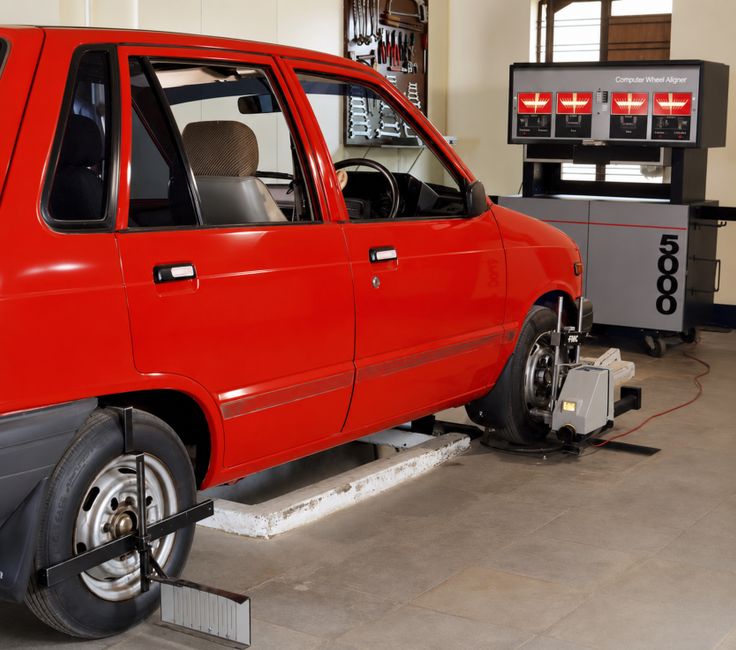
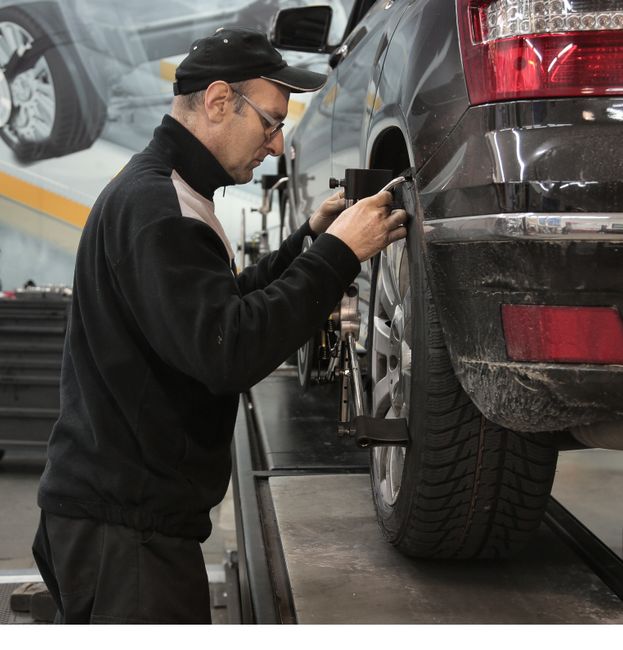
Professional shops rely on laser or digital cameras mounted on a tripod to capture each wheel’s orientation relative to a reference frame. The data feed into software that calculates the three angles and flags deviations beyond manufacturer tolerances.
- Pulling to one side: The vehicle drifts without driver input, indicating unequal toe or caster values.
- Vibrating steering wheel: Often a symptom of camber imbalance that forces the tires to fight each other.
- Uneven tire wear patterns: Feathered edges on the inner side point to excessive negative camber; outer‑edge wear suggests positive camber or toe‑out.
For DIY enthusiasts, a simple string‑and‑tape method can reveal gross toe errors. Stretch a taut string along the vehicle’s longitudinal axis, then measure the distance between the string and the front of each tire at a set height. A discrepancy of more than 5 mm typically indicates a need for professional adjustment.
Step‑by‑step: performing a basic wheel alignment
While full‑service alignment requires calibrated equipment, a practical three‑step routine can correct the most common errors on a home garage floor.
- Set a baseline reference: Park the car on a level surface, lock the steering wheel at the straight‑ahead position, and note the steering wheel’s center mark.
- Adjust toe: Loosen the tie‑rod end caps on each front wheel. Using a tape measure, bring the front edges of the tires to within 2 mm of each other (for a typical passenger car). Tighten the caps while maintaining the measured distance.
- Check camber: Raise each wheel with a jack, place a camber gauge against the wheel rim, and compare the reading to the manufacturer’s spec (often –0.5° to +0.5°). If the reading falls outside the range, loosen the upper control arm bolts, shift the arm inward or outward, then retighten. Re‑measure until the spec is met.
After adjustments, drive the car at 40 km/h on a straight, smooth road. The steering wheel should remain centered without corrective input. If drifting persists, revisit the measurements—small errors compound quickly.
Common pitfalls when attempting a DIY alignment
Novices frequently overlook the interdependence of angles. Tightening the toe after camber adjustment can inadvertently shift camber back out of spec because the tie‑rod geometry influences wheel tilt. Another mistake is neglecting the rear axle; many vehicles use rear toe to stabilize high‑speed handling, and altering front toe without checking rear balance can induce oversteer.
Using cheap, uncalibrated gauges also leads to false confidence. A gauge that is off by 0.2° can produce a misalignment that feels acceptable initially but reverts to wear after a few thousand kilometers.
Cost‑benefit analysis: when to seek professional service
Professional alignment typically costs between $80 and $150, depending on vehicle type and region. The investment pays off when the vehicle exhibits any of the following:
- Visible tire wear beyond a quarter of the tread depth.
- Fuel consumption spikes of more than 5 % over the previous month.
- Noticeable pull or vibration that persists after a DIY toe correction.
In such cases, a professional service not only restores the angles to factory tolerance but also inspects suspension components for wear—ball joints, bushings, and strut mounts—that can cause recurring misalignment.
Seasonal considerations: aligning for temperature extremes
Metal suspension parts expand with heat and contract with cold, shifting angles by up to 0.2° in extreme climates. Drivers in regions with harsh winters should schedule an alignment after the first thaw, when road‑salt corrosion can loosen mounting bolts. Conversely, summer‑time alignments benefit from stable ambient temperatures, reducing measurement drift during the procedure.
The future of wheel alignment: adaptive and digital systems
Modern vehicles increasingly incorporate steer‑by‑wire and active suspension that can modify camber and toe on the fly. Sensors constantly monitor wheel angles, feeding data to an ECU that corrects deviations in real time. While these systems reduce the need for periodic manual alignment, they introduce new maintenance layers—software updates, sensor calibration, and electronic actuator health checks.
Even with adaptive technology, the underlying physics remain unchanged. Understanding the mechanical principles empowers owners to evaluate whether a vehicle’s self‑aligning system is functioning correctly or if a mechanical fault is masquerading as a software glitch.
Takeaway: aligning expectations with reality
Wheel alignment is not a one‑time checklist item but a dynamic condition that interacts with tire health, fuel economy, and handling confidence. By grasping the role of camber, caster, and toe, drivers can interpret warning signs, decide when professional intervention is justified, and perform basic corrections without compromising safety. The long‑term payoff—extended tire life, steady fuel costs, and predictable road behavior—outweighs the modest time and monetary investment required to keep the wheels true.

Comments (0)
No comments yet. Be the first to comment!
Leave a Comment